I am Mohammadreza Rohaninezhad researcher in metamaterials, transparent antennas, and THz absorbers, inventor of the world's first liquid-dielectric mutual-coupling reduction method, and Core Network engineer at NAK. From RIS and 6G to full-duplex MIMO, my work lives where electromagnetics meets what comes next.

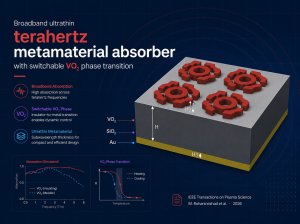
Design and analysis of metamaterial absorbers for terahertz applications — the subject of my PhD thesis and ongoing lab work.
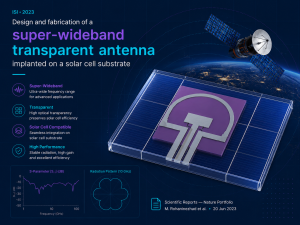
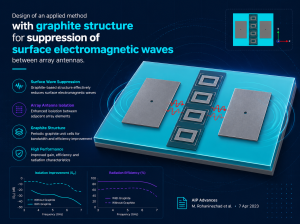
Optically transparent antennas on solar-cell substrates, electromagnetic band gap structures, and frequency selective surfaces.
Multiphysics simulation of wave scattering in complex media, RCS and RCS reduction, and metasurface-based propagation control.
Reconfigurable intelligent surfaces and metasurface-assisted links as building blocks of sixth-generation networks.
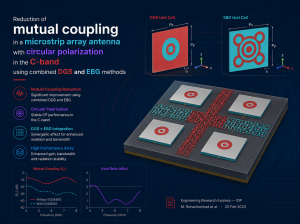
Array antenna design, mutual-coupling suppression, and full-duplex relay architectures for high-capacity wireless systems.
Author of an IntechOpen book on Free Space Optics technologies in the B5G and 6G era — advances, perspectives, applications.

CS Core planning and optimization across live operator environments — Nokia DX200/IPA2800 circuit-switched core.

Chief Research Consultant & Supervising Advisor in antenna and metasurface studies, providing senior‑level scientific guidance, academic supervision, and research consultation. Experienced in mentoring authors, supporting technical papers, and offering high‑level insights for advanced electromagnetic research projects.

Future technologies: 6G roadmapping, reconfigurable intelligent surfaces, metasurface and antenna design.

Specialized in interference mitigation and radio network monitoring.

Electromagnetic wave scattering in complex media, metasurface applications, FSS, RCS reduction, EBG, THz metamaterial absorbers, and array antennas — simulated in CST, MATLAB, and COMSOL.

Thesis: “Design and Analysis of Metamaterial Absorbers for Terahertz Applications.”

Thesis: “Reducing Mutual Coupling in Array Antennas with Liquid Dielectric.”
arXiv:2607.28395v1 Announce Type: new Abstract: Personal privacy devices (PPDs) typically emit strong tones or swept narrowband signals to jam nearby GNSS receivers and deliberately cause loss of lock. Excision methods deployed on…
rss.arxiv.org EXPORT.ARXIVarXiv:2607.27643v1 Announce Type: new Abstract: Near-field beam training in extremely large-scale multiple-input multiple-output (XL-MIMO) vehicle-to-infrastructure (V2I) systems incurs high overhead due to large range-angle codebooks and rapid channel variation. This paper proposes…
rss.arxiv.org EXPORT.ARXIVarXiv:2511.05318v2 Announce Type: replace-cross Abstract: Although the absorption of light in a bulk homogeneous semiconductor produces photocarriers with non-zero momentum, it generally does not produce a current in the absence of an…
rss.arxiv.org EXPORT.ARXIVarXiv:2607.28231v1 Announce Type: cross Abstract: The four laws by Arago and Fresnel distinguish the coplanarity of two light beams to determine their capacity of interference, laying the historic milestone for conceptualizing the…
rss.arxiv.org EXPORT.ARXIVarXiv:2607.27349v1 Announce Type: new Abstract: In this paper, we introduce a meshless physics-informed neural network based computational framework for solving two-dimensional electromagnetic wave scattering in inhomogeneous media. The framework embeds frequency-domain Maxwell…
rss.arxiv.org EXPORT.ARXIVarXiv:2607.28339v1 Announce Type: cross Abstract: Photochemically induced dynamic nuclear polarization (photo-CIDNP) in liquid-state donor-acceptor systems is typically studied at a limited number of excitation wavelengths, leaving its spectral dependence incompletely characterized. Understanding…
rss.arxiv.org EXPORT.ARXIVarXiv:2607.27695v1 Announce Type: cross Abstract: The recently discovered magnetic exciton in the van der Waals (vdW) antiferromagnet NiPS3 exemplifies these phenomena, exhibiting several distinctive characteristics. Despite extensive investigation, much of its physics…
rss.arxiv.org EXPORT.ARXIVarXiv:2607.27771v1 Announce Type: cross Abstract: Hybrid systems based on magnons in ferromagnetic materials, such as yttrium iron garnet, have achieved remarkable development in the last decade. These include the coupling of magnons…
rss.arxiv.org EXPORT.ARXIVarXiv:2607.28461v1 Announce Type: cross Abstract: Machine-learned interatomic potentials (MLIPs) have emerged as a transformative tool for computational materials science and chemistry, with universal potentials trained on large and diverse datasets now routinely…
rss.arxiv.org89 total citations across these papers · Google Scholar →


هنوز موردی ثبت نشده — از پیشخوان ← Talks & Presentations ← Add New اضافه کنید.
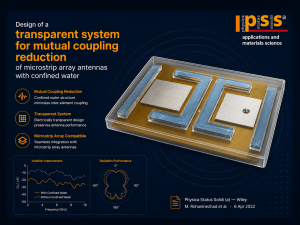
A new class of decoupling for antenna arrays, using a liquid dielectric medium to suppress mutual coupling between elements.
★ WORLD-FIRST METHODA liquid-dielectric radiator architecture enabling beam steering through physical beam rotation in the array.
Ranked in the top 15% of Institute of Physics reviewers (2025), Peer Review Excellence training graduate, and recipient of the IOP Outstanding Reviewer Award.
Recognising researchers who have delivered exceptional peer review reports over in 2025. The awards highlight the essential contribution reviewers make in upholding the quality, integrity and rigour of published research.


Open to research collaboration, peer review, and consulting.
Have a question or a collaboration idea? Send it directly.